
TL;DR
Cash secured puts allow investors to collect option premium while agreeing to buy a stock at a price they already consider attractive. They are the first step of the options wheel strategy, helping traders generate recurring income before potentially owning shares at a discount. When combined with proper stock selection and disciplined risk management, cash secured puts can become a reliable long-term income strategy.
Why Get Paid While Waiting to Buy Stocks?
Most investors use limit orders when they want to purchase a stock below its current market price.
For example, if Apple is trading at $220 but you’d rather buy it at $210, you simply place a limit order and wait. The problem is that your money sits idle until the stock reaches your target price, and you earn nothing while waiting.
This is where cash secured puts offer a smarter alternative.
Instead of waiting for free, you collect an option premium from another investor in exchange for agreeing to buy the stock if it falls to your chosen price. If the stock never reaches your strike price, you keep the premium and can repeat the process.
For income-focused investors, this strategy creates an opportunity to earn consistent cash flow while remaining disciplined about the stocks they buy.
What Is a Cash-Secured Put?
A cash secured put is an options strategy where you sell a put option while keeping enough cash in your brokerage account to purchase 100 shares of the underlying stock if assignment occurs.
The phrase cash secured simply means your obligation is fully backed by cash. Unlike leveraged options strategies, you’re financially prepared to buy the shares if necessary.
When you sell one put contract, you agree to purchase 100 shares at the option’s strike price before expiration if the buyer chooses to exercise the contract.
In return, you immediately receive a premium, which becomes yours to keep regardless of the outcome.
Example
Suppose Microsoft is trading at $450.
You would happily own the stock at $440, so you sell one $440 put that pays a premium of $2.00 per share.
Because one contract represents 100 shares:
- Premium collected: $200
- Cash required: $44,000
- Effective purchase price if assigned: $438 per share
If Microsoft stays above $440, the option expires worthless and you keep the $200.
If the stock drops below $440, you’ll purchase the shares, but your collected premium lowers your effective cost basis.
Buy Limit Order vs. Selling a Cash-Secured Put
| Buy Limit Order | Cash Secured Put |
|---|---|
| Waits for the stock to reach your target price | Gets paid while waiting |
| Earns no income | Collects premium immediately |
| Buys only if the price falls | May buy the stock while keeping premium |
| No flexibility | Can close, roll, or allow assignment |
For investors already planning to purchase quality companies, selling cash secured puts often provides a better risk-adjusted approach than simply placing a limit order.
How Does the Options Wheel Strategy Work?
The options wheel strategy is a repeatable income strategy that begins with selling cash secured puts and continues with covered calls after stock assignment.
The goal isn’t simply to own stock.
The goal is to generate recurring premium income throughout the entire investment cycle.
The Wheel Strategy follows four simple steps:
Step 1: Sell Cash-Secured Puts
Sell put options on companies you’d like to own.
You immediately collect premium income.
If the option expires worthless, repeat Step 1.
Step 2: Get Assigned Shares
If the stock closes below your strike price at expiration, you’ll purchase 100 shares.
Because you already collected premium, your actual purchase price is lower than the strike price.
Step 3: Sell Covered Calls
After assignment, begin selling covered calls against your shares.
This creates another stream of premium income while waiting for the stock to appreciate.
Step 4: Shares Get Called Away
If the stock rises above your covered call strike price, your shares are sold at a profit.
You then return to Step 1 and begin selling cash secured puts again.
This repeating cycle is why it’s called the Wheel Strategy, and it’s one of the reasons many investors refer to it as the Triple Income Strategy.
Why Many Investors Prefer Cash Secured Puts
For long-term investors, cash secured puts provide several advantages over simply buying shares at market price.
Generate Passive Income
Every put sold produces premium income upfront.
If the option expires worthless, you can continue selling puts month after month.
Buy Stocks at a Discount
If assignment occurs, the premium lowers your effective purchase price.
That creates a built-in margin of safety.
Benefit From Theta Decay
Options lose value as expiration approaches through Theta decay.
Since option sellers benefit from this time decay, every passing day generally works in their favor, assuming the stock price remains stable.
Reduce Emotional Investing
Instead of chasing momentum stocks, you establish a purchase price before entering the trade.
This encourages patience and removes much of the emotion from investing.
Best Practices for Selling Cash Secured Puts
Successful investors don’t simply sell puts on any stock. They follow a disciplined process that focuses on probability, risk management, and long-term investing.
What Are the Best Settings for Selling Cash Secured Puts?
Most experienced options traders sell cash secured puts with 30–45 days to expiration (DTE) and a Delta between 0.20 and 0.30. This combination offers an attractive balance between premium income, probability of success, and flexibility.
Focus on 30–45 Days to Expiration
The 30–45 DTE window is widely favored because it provides enough time to collect meaningful premium while allowing Theta decay to accelerate as expiration approaches.
Benefits include:
- Higher premium compared to shorter expirations
- Faster time decay working in your favor
- More opportunities to manage or roll positions
- Reduced assignment risk compared to holding until the final days
Many Wheel Strategy investors simply repeat this cycle every month.
Target a Delta Between 0.20 and 0.30
Delta estimates the probability that an option will finish in the money.
For example:
- 0.20 Delta ≈ roughly a 20% chance of assignment
- 0.30 Delta ≈ roughly a 30% chance of assignment
Choosing this range often provides a balance between collecting worthwhile premium and reducing the likelihood of buying shares unexpectedly.
What Are the Best Stocks for Selling Cash Secured Puts?
The best stocks for selling cash secured puts are fundamentally strong, highly liquid companies that you would be comfortable owning for years.
Remember, assignment is not a failure of the strategy. It’s part of the Wheel.
Look for companies that have:
- Strong earnings and cash flow
- Healthy balance sheets
- High daily trading volume
- Active options markets
- Long-term growth potential
Many investors focus on well-known companies such as:
- Apple
- Microsoft
- Amazon
- Costco
- Coca-Cola
- Johnson & Johnson
Avoid speculative stocks, meme stocks, or companies with uncertain financials simply because they offer high option premiums. Higher premiums almost always come with higher risk.
What Happens When a Cash Secured Put Is Assigned?
Assignment means you purchase 100 shares of the stock at your agreed strike price.
While some beginners worry about assignment, experienced Wheel Strategy traders often welcome it because they planned for it from the beginning.
Suppose you sold a $100 put and collected a $3 premium.
If assigned:
- Purchase price: $100
- Premium collected: $3
- Effective cost basis: $97 per share
Now that you own the shares, you move to the next phase of the Wheel Strategy by selling covered calls against your position to generate additional income.
Assignment is simply the transition from Step 1 to Step 2 of the Wheel.
Understanding the Risks
Although cash secured puts are considered one of the more conservative options strategies, they still involve risk.
Stock Price Declines
The biggest risk is that the stock falls well below your strike price.
For example:
- Strike Price: $80
- Stock falls to $60
You’ll still purchase the shares at $80.
The premium helps reduce your cost basis, but it doesn’t eliminate losses if the stock continues to decline.
Capital Requirements
Selling cash secured puts requires enough cash to buy 100 shares.
That means part of your portfolio remains tied up until the trade expires or assignment occurs.
Limited Profit
Unlike buying stock, your profit is limited to the premium collected.
If the stock rallies sharply, you don’t participate in those gains because you never owned the shares.
For investors focused on steady income rather than rapid growth, this trade-off is often worthwhile.
Is the Wheel Strategy Actually Profitable?
Yes, the Wheel Strategy can be profitable when applied consistently to quality stocks with proper risk management.
However, it’s important to understand that no options strategy guarantees profits.
Success depends on:
- Selecting strong companies
- Managing position size
- Avoiding excessive risk
- Remaining disciplined during market volatility
- Consistently applying the strategy over time
Many income-focused investors appreciate the Wheel because it creates multiple opportunities to earn premium, whether or not they’re assigned shares.
Rather than trying to predict short-term market movements, the strategy focuses on collecting recurring income while investing in businesses you’d be happy to own.
Continue Learning the Wheel Strategy
Understanding the basics is only the beginning. The most successful options traders continually refine their approach through education and experience.
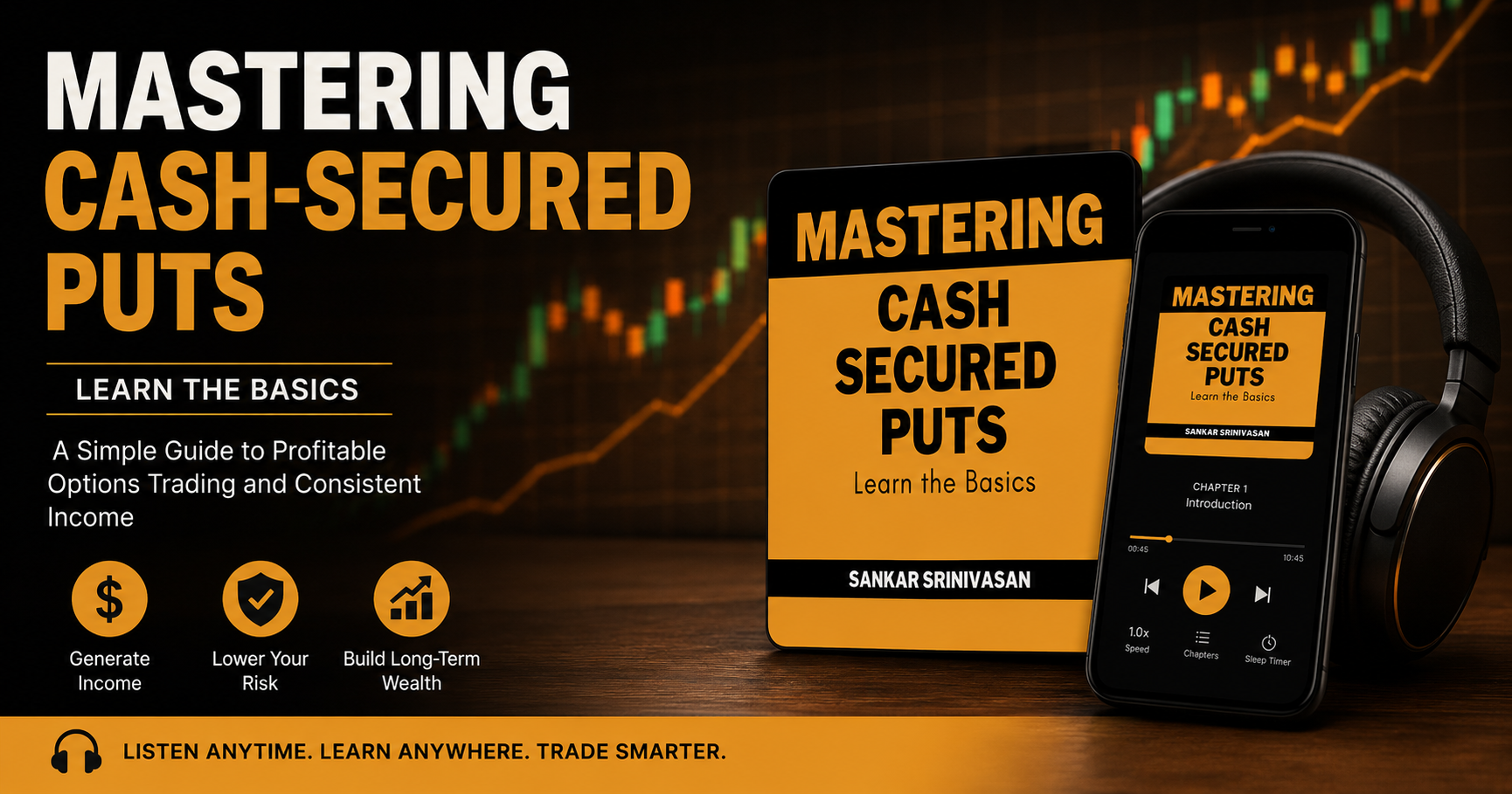
If you’re serious about mastering cash secured puts, strike price selection, assignment management, and building a consistent options income strategy, consider listening to Mastering Cash-Secured Puts: An Easy Guide to Profitable Option Trading.
Whether you’re just getting started or looking to improve your execution, this audiobook provides practical insights to help you trade with greater confidence.
Frequently Asked Questions
Are cash secured puts good for beginners?
Yes. Cash secured puts are widely considered one of the most beginner-friendly options strategies because they are fully backed by cash and involve purchasing stocks you already want to own.
How much money do I need to sell cash secured puts?
You’ll need enough cash to purchase 100 shares at the strike price. For example, selling one $50 put requires approximately $5,000 in buying power.
What happens if my put is assigned?
If assigned, you’ll purchase 100 shares at the strike price. Your effective purchase price is reduced by the premium you collected, and you can then begin selling covered calls as part of the Wheel Strategy.
Can you lose money selling cash secured puts?
Yes. If the stock falls significantly below your strike price, the value of your shares may decline. The premium collected helps reduce your cost basis but does not eliminate downside risk.
Is the Wheel Strategy suitable for long-term investors?
For investors who want to generate recurring income while accumulating quality stocks, the Wheel Strategy can be an effective long-term approach. It emphasizes discipline, patience, and investing in fundamentally strong companies rather than chasing speculative trades.
Final Thoughts
Cash secured puts are more than just an options strategy—they’re the foundation of the options wheel strategy and a practical way to generate income while buying quality stocks at prices you’re comfortable paying.
Instead of letting cash sit idle while waiting for a buying opportunity, you can earn premium income and potentially lower your cost basis if you’re assigned shares. Combined with covered calls, this creates a repeatable process that many investors use to pursue consistent, long-term returns.
Like any investment strategy, success comes from discipline, patience, and proper risk management. Focus on high-quality companies, use appropriate position sizing, and treat assignment as part of the plan rather than something to fear.