
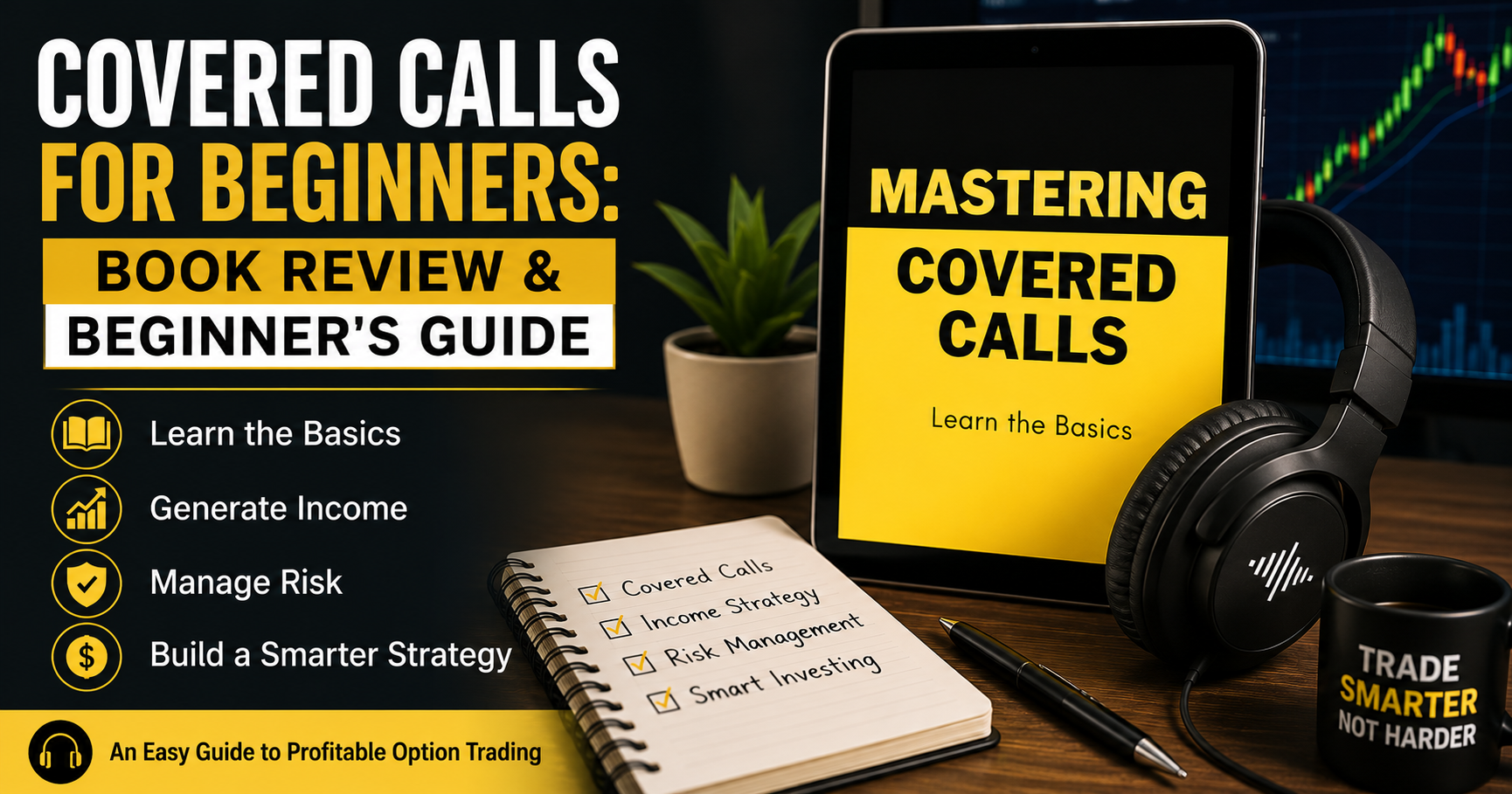
If you’ve been searching for covered calls for beginners, you’ve probably noticed one thing:
There’s no shortage of information online.
Unfortunately, much of it is either overly technical or oversimplifies the strategy. Some articles assume you already understand options trading, while others promise unrealistic returns without adequately explaining the risks.
For new investors, that can make learning covered calls feel overwhelming. That’s why having a structured guide written specifically for beginners can make a significant difference.
Mastering Covered Calls: An Easy Guide to Profitable Option Trading by Sankar Srinivasan provides a straightforward introduction to one of the most popular income-generating options strategies. Rather than overwhelming readers with complex theory, the book focuses on helping investors understand how covered calls work and how they can be incorporated into a long-term investing approach.
What Are Covered Calls?
A covered call is an options strategy where an investor sells a call option against shares they already own.
In exchange for giving another investor the right to purchase those shares at a predetermined price before expiration, the investor receives an option premium.
Many investors use covered calls to potentially:
- Generate additional income from stocks they already own
- Supplement dividend income
- Produce cash flow during sideways markets
- Potentially reduce the cost basis of long-term investments
- Add a conservative options strategy to their portfolio
Because the strategy is backed by owned shares, covered calls are often considered one of the more approachable options strategies for beginners—although they still involve risks and trade-offs.
Why Beginners Need a Structured Learning Resource
Learning covered calls through random YouTube videos, online forums, or social media posts often leaves important gaps.
New investors frequently ask questions like:
- Which stocks are best for covered calls?
- How do strike prices work?
- What happens if my shares get assigned?
- How much income is realistic?
- When should I roll a covered call?
Without a structured foundation, it’s easy to misunderstand the mechanics of the strategy or develop unrealistic expectations.
That’s where a beginner-focused resource can help.
About Mastering Covered Calls
Written by Sankar Srinivasan, a Certified Market Professional with more than 20 years of market experience, Mastering Covered Calls: An Easy Guide to Profitable Option Trading introduces readers to covered call investing using clear explanations and practical examples.
Available as an audiobook, it’s designed for investors who want to learn while commuting, exercising, or simply prefer listening over reading.
The audiobook covers topics including:
- The fundamentals of options trading
- Understanding call options, premiums, strike prices, and expiration dates
- How covered calls work
- Step-by-step covered call examples
- Strategies for different market conditions
- Rolling covered calls
- Combining covered calls with protective puts
- Common mistakes beginners should avoid
Rather than focusing on complicated mathematical models, the content emphasizes practical application and real-world investing scenarios.
What You’ll Learn
1. A Strong Foundation in Options Trading
Before learning covered calls, it’s important to understand the basic terminology.
The audiobook explains concepts such as:
- Call options
- Option premiums
- Strike prices
- Expiration dates
- Assignment
Building this foundation helps beginners understand not only how covered calls work but also why they work.
2. How to Execute a Covered Call
One of the biggest strengths of the audiobook is its step-by-step approach.
Instead of assuming prior knowledge, it walks listeners through the process of:
- Purchasing qualifying stocks
- Selling covered call options
- Collecting option premiums
- Managing positions through expiration
This structured format makes the strategy much easier to understand for first-time options investors.
3. Managing Risk
One common misconception is that covered calls are risk-free.
They aren’t.
While covered calls may reduce some downside risk by collecting premium income, investors still face potential losses if the underlying stock declines significantly.
The audiobook discusses these realities while explaining how covered calls can fit into a conservative investing strategy.
4. Advanced Techniques
Once readers understand the basics, the audiobook introduces more advanced concepts, including:
- Rolling covered calls
- Adjusting positions in changing markets
- Using protective puts alongside covered calls
- Improving consistency over time
These lessons provide a pathway for continued learning as investors gain confidence.
Who Should Read This Book?
Mastering Covered Calls is particularly well suited for:
- Investors new to options trading
- Long-term stock investors
- Dividend investors seeking additional income
- Investors interested in conservative options strategies
- Anyone looking for a beginner-friendly explanation of covered calls
If you already own at least 100 shares of individual stocks, you’ll likely find many of the examples immediately relevant.
Pros
- Beginner-friendly language
- Well-organized progression from basic to advanced topics
- Practical examples instead of heavy theory
- Covers both strategy and risk management
- Short audiobook that can be completed in under two hours
Things to Keep in Mind
Although the audiobook provides an excellent introduction, it should be viewed as an educational resource rather than investment advice.
Covered calls involve risk, including the possibility of having your shares called away and potential losses if the underlying stock declines. Investors should understand these trade-offs before implementing any options strategy.
Is Mastering Covered Calls Worth It?
If your goal is to learn covered calls for beginners without getting overwhelmed by technical jargon, this audiobook offers a practical starting point.
Its greatest strength is accessibility.
Instead of trying to turn beginners into professional options traders overnight, it focuses on building a solid understanding of one of the most widely used income strategies in options investing.
Whether you’re looking to supplement dividend income, better understand options, or simply explore ways to make your portfolio work harder, this audiobook provides a clear roadmap for getting started.
Final Thoughts
Learning covered calls doesn’t have to be complicated.
With the right educational resource, beginners can develop a solid understanding of the strategy, its benefits, and its limitations before risking real money.
Mastering Covered Calls: An Easy Guide to Profitable Option Trading is a strong introductory resource for investors who want a structured, easy-to-follow explanation of covered calls and how they fit into a long-term investing plan.
If you’re ready to deepen your understanding of covered calls for beginners, this audiobook is worth considering as your first step.
👉 Listen to Mastering Covered Calls: An Easy Guide to Profitable Option Trading here.
FAQ
Are covered calls good for beginners?
Covered calls are often considered one of the more beginner-friendly options strategies because they involve selling call options against stocks you already own. However, beginners should first understand the risks, including assignment and opportunity cost.
Do I need 100 shares to sell a covered call?
Yes. A standard covered call generally requires ownership of at least 100 shares of the underlying stock for each call option sold.
Can covered calls generate monthly income?
Many investors use covered calls to potentially generate recurring premium income. However, income is not guaranteed and depends on market conditions, stock selection, and option pricing.
Is Mastering Covered Calls suitable for complete beginners?
Yes. The audiobook is designed to introduce beginners to covered calls, covering the fundamentals before moving into more advanced strategies and practical examples.